Nonlocal Consciousness: The Brain as Receiver
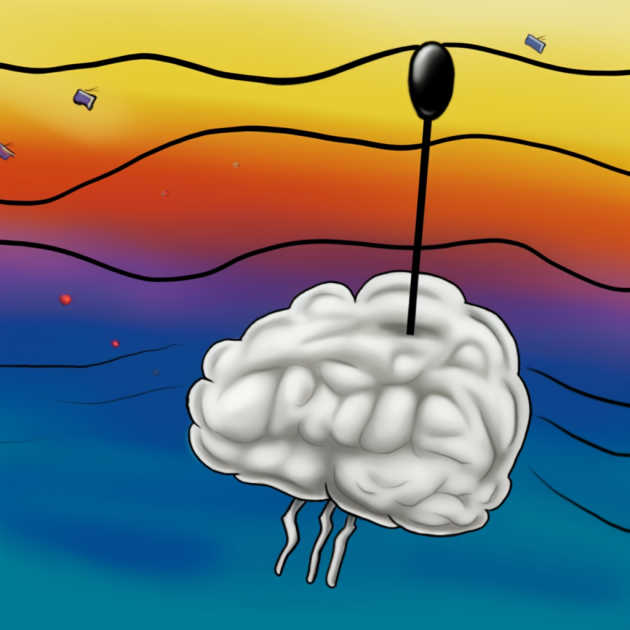
Ideas of nonlocal consciousness challenge the usual picture of the brain as a generator of mind. Instead, the brain is treated as a receiver, filter, or local interface for a more fundamental field of awareness. In the research literature these ideas appear under terms such as nonlocal awareness, post‑materialist models of consciousness, quantum or panpsychic consciousness, and receiver or access theories of mind.
Post‑materialist and Nonlocal Awareness Proposals
One review argues that the “hard problem” persists because the assumption that consciousness is solely produced by neural interactions is incomplete. It surveys data in which consciousness or information seems to extend beyond the brain and body in space and time, and suggests that these “non‑local” effects support the need for post‑materialist models where consciousness is not fully brain‑bound. The mechanisms are speculative and sometimes compared to quantum entanglement.
A neurobiological perspective distinguishes between consciousness (embodied, dualistic, content‑filled) and awareness, described as nondual, nonlocal, ever‑present self‑awareness. On this view, nonlocal awareness is the default background, while ordinary conscious contents are modulations of this deeper field. Meditation and similar practices are ways of shifting back toward this nonlocal baseline, with measurable brain correlates but not reducible to them.
Quantum and “Brain‑as‑Access” Models
Several authors use quantum information theory to redraw the mind–brain boundary. One quantum information theoretic approach identifies first‑person conscious states with unobservable quantum state vectors in “quantum brain states.” The observable brain then becomes a third‑person classical construct created when the environment “measures” these quantum states. This makes consciousness fundamentally private and nonclassical, with the brain as its public projection or interface.
A related line of work treats consciousness as a quantum phenomenon tied to a universal quantum vibrational field. In this picture, brain, body, and environment can be coupled through large‑scale, nearly instantaneous synchrony, including correlations between brain rhythms and global electromagnetic resonances. The brain becomes a kind of tunable antenna within an already present quantum‑informational field of consciousness rather than the origin of that field.
Other quantum perspectives review models where consciousness might arise from quantum processes in microtubules, in the brain’s electromagnetic field, or in neurotransmitter‑mediated interactions. Even when they remain brain‑centered, they often imply that conscious states depend on delocalized or entangled information, blurring simple localist pictures of mind.
Some speculative frameworks go further and model consciousness directly as part of quantum waves or information fields. In these “access not creation” views, neural processes do not manufacture experience; instead, they select, shape, or access an underlying mental aspect of quantum reality, in line with neutral monism or panpsychic ideas.
Hyperdimensional and Panpsychic Nonlocal Theories
A strongly nonlocal panpsychic model proposes a hyperdimensional layer that includes cosmic consciousness, hyperspace, and hypertime, pervading all of spacetime at sub‑Planck scales. Each system (from atom to organism) has a “semantic field” or syg‑field, a meaningful organizational layer that is mostly nonlocal and only partly embodied. Consciousness here has a double nature: largely hyperdimensional and nonlocal, but locally expressed via brains and bodies. Instant, telepathy‑like connections are explained through “pure semantic energy” linking resonant semantic fields, with the brain functioning as tuner and amplifier of this deeper semantic consciousness.
Panconsciousness and related panpsychic approaches also appear in philosophical treatments of quantum nonlocality. Some reputable authors suggest that if the universe is itself conscious (and playful!), then nonlocal correlations in physics might be understood as manifestations of a unified, universal subject, where distance is not a fundamental obstacle for information or experience.
Consciousness as Fundamental Dimension
Another speculative physical model introduces a “consciousness particle” or primion into particle physics. Consciousness is treated as an independent fundamental dimension that preserves integrity in awareness and unifies causation, relativity, and quantum mechanics. Quantum entanglement is reinterpreted as sharing parameters in consciousness, supporting a non‑local reality. The mind is then what becomes aware of both local and nonlocal realities through this consciousness dimension, while the brain and senses are specialized for local spacetime experience.
Where These Theories Stand
Across these diverse proposals, the common themes include:
- Consciousness is treated as fundamental, and not as a late‑stage by‑product of neural computation.
- The brain is framed as receiver, filter, tuner, or interface, not sole generator.
- Quantum nonlocality, hyperdimensional structures, or panpsychic fields are invoked to explain experiences that seem to transcend local brain activity.
References:
- Wahbeh H, Radin D, Cannard C, Delorme A. What if consciousness is not an emergent property of the brain? Observational and empirical challenges to materialistic models. Frontiers in Psychology. 2022.
- Georgiev DD. Quantum information theoretic approach to the mind-brain problem. Progress in Biophysics and Molecular Biology. 2020.
- Zhi G, Xiu R. Quantum Theory of Consciousness. Journal of Applied Mathematics and Physics. 2023.
- Gassab L, Pusuluk O, Cattaneo M, Mustecaplioglu OE. Quantum Models of Consciousness from a Quantum Information Science Perspective. Entropy. 2024.
- Georgiev DD. Quantum information theoretic approach to the hard problem of consciousness. Bio Systems. 2025.
- Samarawickrama M. Conscious Model of Particle Physics: The Grand Theory Unifying Local and Non-Local Realities. Journal of Physics: Conference Series. 2024.
- Hardy C. Nonlocal consciousness in the universe: panpsychism, psi and mind over matter in a hyperdimensional physics. 2017.
- Gruber DR. What’s It Like to Be a Universe: Implications of Being In, Of, and About a Brain, or a Speculative Panconsciousness Approach to Quantum Nonlocality. The Journal of Speculative Philosophy. 2022.
- Deshmukh V. Consciousness, Awareness, and Presence: A Neurobiological Perspective. International Journal of Yoga. 2022.